
PRODUCTS
PRODUCTS
PRODUCTS

Masonry mortar specifically for aerated concrete blocks – mortar specially formulated for autoclaved aerated concrete blocks
Main business:Building, infrastructure, industrial, mining, marine engineering, military engineering, expressway, tunnel, bridge, concrete repair, installation of large-scale mechanical equipment, wind power equipment, foundation bolt fixing, etc. High-performance, early-strength, micro-expansion, self-compacting, large-flow leveling, rapid repair cement grouting material
- Commodity name: Masonry mortar specifically for aerated concrete blocks – mortar specially formulated for autoclaved aerated concrete blocks
- Description
-
1. Packaging and Logistics Delivery Date Guarantee
Packaging Three-ply film-composite bag Specifications 25KG/ bag Volume 60*40*15 cm³ Minimum order quantity 1000KG Minimum order quantity Delivery date 1-7 Workday Shelf life Dry and well-ventilated 180 days Transaction method FOB/EXW Payment method Telegraphic Transfer / Letter of Credit Ship goods FOB Shanghai / Ningbo 2. Product Description
Aerated block-specific masonry mortar, also known as aerated concrete masonry mortar or thin-layer mortar, is a specialized mortar designed specifically to complement aerated concrete blocks (AAC Blocks)—a new type of wall material characterized by its porosity and high water absorption.
Its key difference from traditional cement mortar lies in its high water-retention capacity and strong bonding performance. In traditional mortar, moisture tends to be quickly absorbed by aerated blocks, leading to insufficient cement hydration, reduced strength, and poor adhesion—issues that can trigger cracks and hollow sounds in walls. Specialized mortar addresses these problems perfectly by incorporating admixtures such as water-retaining agents and redispersible latex powders.

3. Core Features
1. High water-retention capacity: Effectively prevents aerated concrete blocks from rapidly absorbing moisture, ensuring complete hydration of the cement in the mortar and thereby achieving high strength.
2. High Bonding Strength: Forms an extremely strong bond with the surface of aerated concrete blocks, preventing hollowing and detachment of the wall.
3. Good workability and ease of construction: The mortar is soft and smooth, with fully filled joints, making construction effortless and highly efficient.
4. Excellent crack resistance: Reduces wall cracks caused by mortar shrinkage or poor adhesion.
5. Thin-layer masonry is achievable: Typically, a thin-mortar dry-laying method (with mortar joint thickness ranging from 3 mm to 5 mm) is employed, which can effectively reduce thermal bridges in walls and enhance the overall thermal insulation performance of the wall.
4. Technical Parameters
Technical indicators Unit Performance Requirements/Typical Values Testing standards Water retention rate % ≥ 99% JGJ/T 70-2009 Tensile bond strength MPa ≥ 0.30 (28 days, with aerated concrete blocks) JGJ/T 70-2009 ≥ 0.20 (14 days, with aerated concrete blocks) Compressive strength MPa Available in design-specific grades such as M5, M7.5, M10, etc. GB/T 17671-2021 Consistency mm According to construction requirements, it is typically between 70 and 90. JGJ/T 70-2009 Setting time h Usually 3–9 hours (depending on the product formulation). JGJ/T 70-2009 Dry density kg/m³ ≤ 1800 GB/T 25181-2019 Shrinkage rate % ≤ 0.50% JGJ/T 70-2009 5. Scope of Use
1. Core application : Masonry and plastering of autoclaved aerated concrete blocks (AAC blocks).
2. Applicable Building Types :
● Interior and exterior infill walls for various types of civil and industrial buildings.
● Buildings with high requirements for thermal insulation, heat retention, and fire resistance.
● Enclosing walls for frame structures and steel structures.
3. Construction Process : It is suitable for both traditional thick-mortar masonry (mortar joint thickness ≤15mm) and is particularly recommended for thin-layer masonry (mortar joint thickness 3mm–5mm), enabling full utilization of its performance and the advantages of aerated concrete blocks.
Precautions:
● Strictly prohibited: Do not use on low-water-absorption substrates such as sintered bricks and solid concrete bricks, as their excessively high water-retention rate can prevent moisture from evaporating, leading to prolonged dampness and compromising strength.
● Substrate Preparation: Before construction, the substrate must be clean and free of dust and oil stains. For substrates that are very dry, you may lightly dampen them, but there must be no visible standing water on the surface.
6. Application scenarios
7. Success Stories

8. Reasons to Choose Us
- Our company has a professional technical R&D team that provides free assistance in resolving all technical challenges you may encounter during construction.
- The raw materials used in our company’s products undergo rigorous screening, and we carefully select imported admixtures that are scientifically proportioned. The quality tolerance for the three-stage processing does not exceed one-thousandth, ensuring that their functional characteristics meet the diverse application requirements of our customers.
- High cost performance: Choose our company’s products. You’ll save 50% on labor, 50% on materials, and 50% on time—boosting construction efficiency and delivering significant economic benefits. We’ll ensure the quality of your project, giving you peace of mind and eliminating any future worries.
- Provide third-party type test reports, certificates of conformity, warranty certificates, special invoices, MSDS, and TCIR.
- Qualification certifications: CCC, CMA, CNAS, ISO9001, CE/FCC; Product execution standard: JC/T890-2017
- We have successful track records in the supply chain for large-scale wind power projects both domestically and internationally. Quality commitment guaranteed!

Factory Strength

Qualification
Message
Please provide the following valid information, and we will contact you as soon as possible.
Related Products

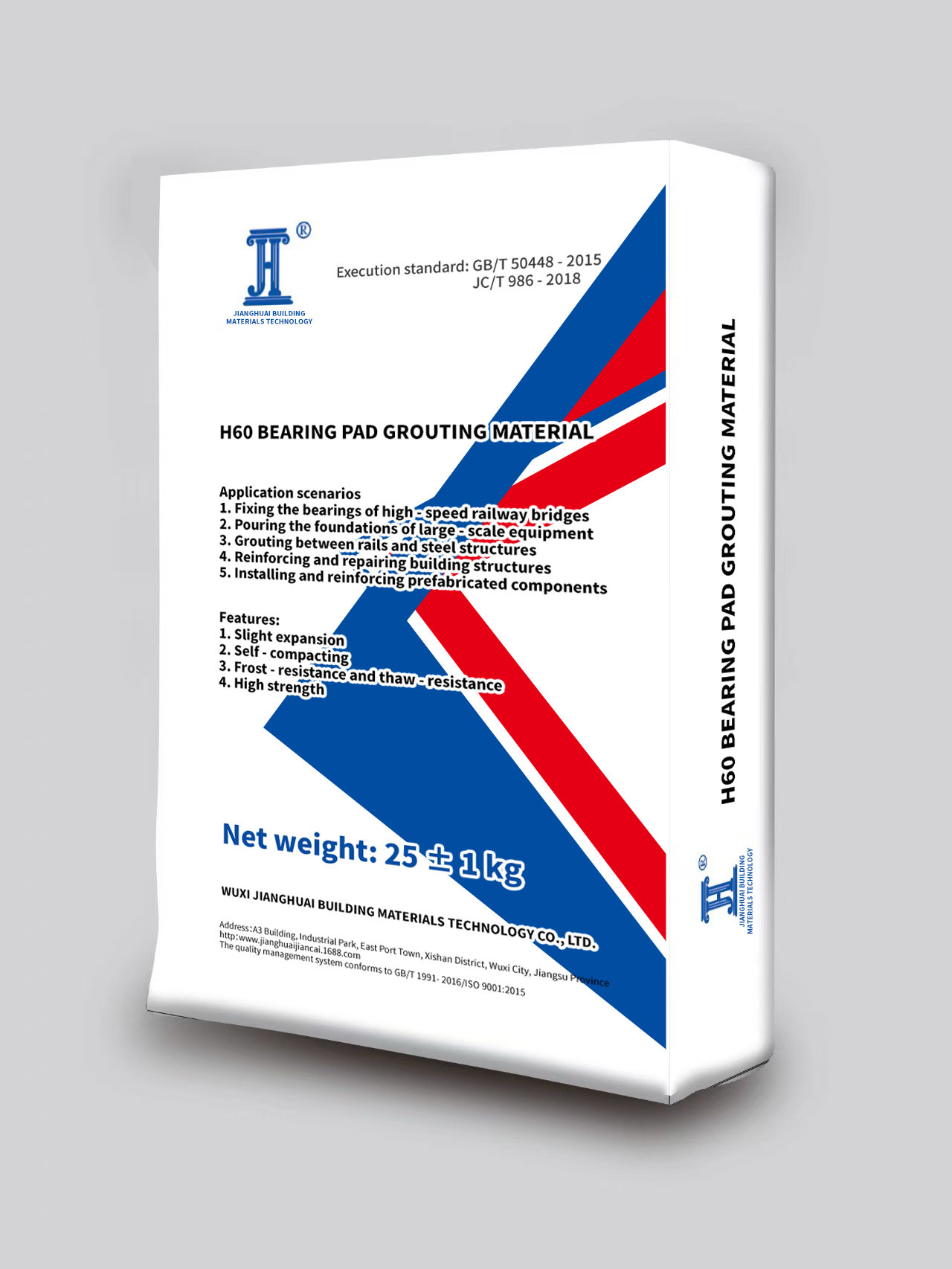


Tel: +86-510-88260993
WhatsApp: +86-14794604132
Mobile: +86-13179683210
+86-13179683410
Email: chinese@cement-grout.com
Address: A3 Building, Industrial Park, East Port Town, Xishan District, Wuxi City, Jiangsu Province





Copyright © 2025 Wuxi Jianghuai Building Materials Technology Co., Ltd . PRIVACY PROTECTION